Best Soil Mix for Propagating Cuttings: Windowsill Recipes Ranked by Drainage and Cost
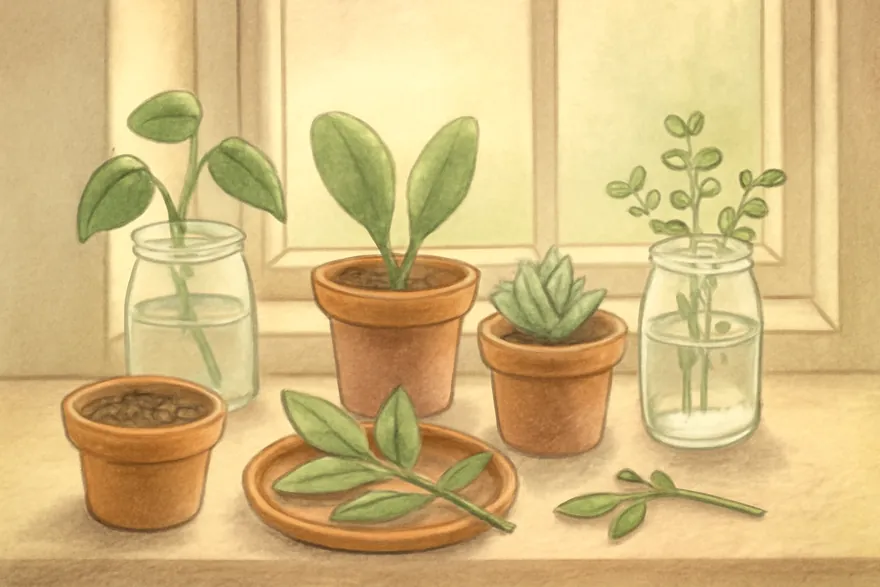
Bagged potting soil is the number-one reason windowsill cuttings rot before they root. It holds too much water around a stem that has no roots yet to drink it up, and its fine particles pack down against the glass of a jar or the walls of a small pot, cutting off the oxygen a cut stem needs just to callus over. A propagation medium has one job that differs from a potting mix's job: hold just enough moisture to keep tissue from drying out while leaving large air gaps for oxygen and for the first fragile root hairs to push through without resistance. Everything below is ranked by how well it does that, plus what it actually costs per batch, because a ratio only matters once you know what you are mixing it from.
Why Bagged Potting Soil Fails Cuttings
Standard potting mix is built around compost, bark fines, and often peat, chosen to feed an established root system over months. For a cutting, that same mix compacts into a dense, waterlogged mass within days of watering. Symptoms show up fast: a black, mushy stem base, a sour smell at the cut line, or fungus gnats swarming the surface within a week. None of that means you have a black thumb -- it means the medium was wrong for the job. The fix is not more careful watering, it is a different particle structure entirely: coarse, chunky, and mostly mineral rather than organic.
Five DIY Recipes, Ranked by Drainage and Cost
These are ordered from fastest-draining to most moisture-retentive. Prices are US street prices for a large bag as of mid-2026, and each assumes you already own a bag of basic pots or a few clean jars.
- Pure perlite -- the fastest-draining option here and the safest for anything prone to rot: succulents, cacti pads, pelargonium, and semi-hardwood cuttings. It holds almost no water reserve and dries out in a day or two on a sunny sill, so it needs daily misting or a humidity dome. A 4-quart bag runs about $7 and stretches across many small pots.
- Perlite and vermiculite, 2:1 -- vermiculite's flat, absorbent flakes add water-holding capacity without sealing off air the way peat can. This is the workhorse for soft, leafy herbaceous cuttings like coleus, basil, and tomato suckers, which would desiccate in pure perlite. Cost runs roughly $10-12 per 8-quart batch.
- Coco coir and perlite, 3:1 -- a coir brick rehydrates to about 9 quarts from a $6-8 block, making this the cheapest option per finished quart, and it is peat-free. It holds moisture longer than the vermiculite blend, which suits tropical foliage cuttings such as pothos, philodendron, and monstera that root over two to four weeks rather than days.
- Sphagnum peat and perlite, 1:1 -- the classic nursery-trade ratio, still effective, but it dries into a hard crust if it fully dries out and then repels water instead of absorbing it (rewet slowly from the bottom if this happens). A 2-cubic-foot peat bale plus perlite covers dozens of batches for well under $20 total.
- Builder's sand and peat, 1:1 -- use only coarse, washed horticultural sand, never play sand or beach sand, both too fine and often carrying salt that will burn root hairs. This mix is heavy, which is useful for top-heavy cuttings that keep tipping small pots over, but it is the slowest-draining recipe here and the most prone to crusting over a six-week rooting window.
When a Commercial Mix Beats DIY
Buying pre-made makes sense in three situations: you are rooting only a handful of cuttings and do not want three separate bags in the closet, you want sterile medium for a plant that has already shown fungal trouble, or you want a physically anchored system rather than loose particles in a small pot.
- Rockwool cubes hold water and air in a fixed structure, which is why hydroponic growers rely on them, and they let you see root emergence through the cube's sides. They run $0.20-0.40 per cube and need pH-adjusted water, since rockwool is naturally alkaline around pH 7-8, or roots will stall.
- Compressed peat pellets, the mesh-wrapped discs that swell in water, are convenient for herb-adjacent cuttings, but the mesh can restrict root spread on slower woody cuttings if left in place past six weeks -- cut it away once roots show through.
- Bagged seed-starting mix is a reasonable stand-in for a DIY perlite-vermiculite blend if you check the label for a coarse, low-fines formula; some big-box seed mixes are actually finer than a potting soil and will compact just as badly.
A university extension office's propagation bulletin or a serious grower's horticulture library is worth a look before buying, since bagged product formulations shift from batch to batch and the ratio printed on the label is not always what is actually inside.
Matching Medium to Cutting Type
No single recipe above is right for every plant on a sill. Match the mix to how fast that species actually roots and how much rot risk it carries:
- Succulents and cacti: pure perlite, or a 3:1 perlite-to-coir blend, watered only once the mix is bone dry an inch down.
- Soft herbaceous stems, such as pothos, coleus, and mint: perlite-vermiculite 2:1, kept evenly moist and never soggy.
- Semi-woody stems, such as hydrangea and rose: peat-perlite 1:1, under a humidity dome for the first two weeks.
- Water-rooted cuttings being weaned onto soil: transition into coco coir and perlite first, since coir mimics the low-resistance environment the roots grew in and cuts down on transplant shock.
Reading the Signs Once Cuttings Are Planted
The medium is only half the job -- watch how it behaves over the following weeks:
- A gentle tug test at day 10-14 that meets resistance means roots have formed; no resistance just means wait, not that the mix has failed.
- White fuzzy mold on the surface within the first week usually means the mix is packed too tight or overwatered, not that it is contaminated -- fluff up the top layer and ease off watering.
- A collapsing, translucent stem base at the soil line, regardless of which recipe was used, is bacterial or fungal rot already set in; that cutting is not salvageable and should come out before it spreads to its neighbors.
- Persistent wilting despite visibly moist medium often points to a rotted stem base rather than a dry mix, so check the cut end before adding more water.
Quick comparison table for: Best Soil Mix for Propagating Cuttings: Windowsill Recipes Ranked by Drainage and Cost
| Section | What to check | How to use it |
|---|---|---|
| Why Bagged Potting Soil Fails Cuttings | Match the conditions and warning signs in this section | Use as a quick practical checklist |
| Five DIY Recipes, Ranked by Drainage and Cost | Match the conditions and warning signs in this section | Use as a quick practical checklist |
| When a Commercial Mix Beats DIY | Match the conditions and warning signs in this section | Use as a quick practical checklist |
| Matching Medium to Cutting Type | Match the conditions and warning signs in this section | Use as a quick practical checklist |
Questions and answers
Why do potting mixes often cause rooting problems on windowsills?
The candidate explains that potting soil is made for established plants and often compacts into a dense, waterlogged mass in small jars or pots. For a cutting, this cuts off oxygen around the cut stem, and it can quickly lead to a black, mushy base, a sour smell, or fungus gnats as early as the first week, which are signs the medium is unsuitable rather than a sign of poor technique.
How should I match the medium to cutting type to reduce rot and improve rooting?
Match recipe choice to stem type: succulents and cacti can use pure perlite, soft herbaceous stems work with perlite-vermiculite 2:1, and semi-woody stems can use peat-perlite 1:1 under a humidity dome for the first two weeks. Water-rooted cuttings are eased into coco coir and perlite first, and signs like collapsing translucent stem base or wilt in moist mix mean rot is already present and that cutting should be removed.