Water Propagation Method for Stem Cuttings: A Windowsill Guide
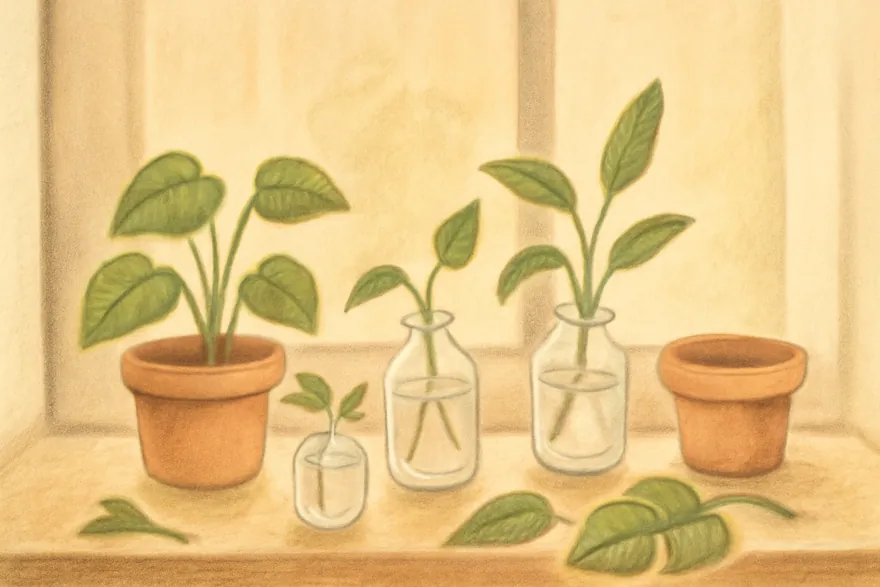
Why Water Rooting Works — and Which Plants Actually Cooperate
When you cut a stem below a leaf node and drop it in water, the plant reads the wound the same way it would in soil: it triggers a cluster of dormant cells near the node to divide and push out adventitious roots. Water just makes the whole process visible, which is exactly why it's the best propagation method for a first-timer — you can watch the roots form instead of guessing what's happening underground.
Not every plant is a good candidate, though. Soft-stemmed, fast growers root reliably in water within two to four weeks: pothos, philodendron, tradescantia (wandering jew), coleus, mint, basil, and tomato suckers all take to a jar with almost no fuss. Woody or semi-woody plants — rosemary, hydrangea, rose, most fruit trees — can root in water, but slowly and with a much higher failure rate, because their stems rot faster than they root. Succulents and cacti should skip water entirely; their stems are built to store moisture, not sit in it, and they'll rot before a root appears. If you're new to propagation, start with a pothos cutting. It's nearly impossible to kill and will show root nubs within a week, which builds the confidence to try trickier plants later.
Step-by-Step: Taking and Setting the Cutting
- Cut 4–6 inches of healthy stem just below a leaf node (the little bump or joint where a leaf attaches) — this is where root cells cluster, and a cut made between nodes usually won't root at all.
- Strip the lower leaves so nothing sits underwater. Leave two or three leaves at the top; more than that and the cutting spends its energy keeping foliage alive instead of growing roots.
- Cut at an angle, not straight across. An angled cut exposes more surface area to root from and keeps the base from sitting flush against the bottom of the jar.
- Choose a clear glass jar or small vase — clear glass lets you check root progress without disturbing the cutting. Skip metal containers; some metals react with the water chemistry and can stunt or blacken new roots.
- Fill with room-temperature water, ideally left out on the counter for 24 hours so chlorine can off-gas. Cold tap water straight from the faucet can shock a fresh cutting into stalling.
- Set the water line below the lowest leaf but covering at least one node. Only the node needs to be submerged — burying leaves is the single fastest way to trigger rot.
- Place the jar in bright, indirect light — a few feet back from a south- or east-facing sill. Direct sun through glass heats the water and grows algae fast; you want light, not a greenhouse effect on the jar itself.
The Daily Water-Change Routine
This is the step people skip, and it's the one that determines whether a cutting roots cleanly or turns to mush. Standing water loses oxygen and becomes a breeding ground for bacteria within a day or two, especially once the cutting starts leaching a small amount of plant sugars into it. Fresh, oxygenated water is what root tips actually need to keep dividing.
- Change the water every 1–3 days — daily for fast-transpiring plants like coleus or basil, every two to three days for slower ones like philodendron.
- Rinse the cutting's stem under running water at each change to remove the thin biofilm that builds up on submerged tissue — it feels slightly slimy if you run a finger down the stem.
- Wipe out the jar, don't just top it up. Algae and bacterial film cling to the glass even after you pour the old water out.
- Refill with water at roughly the same temperature as what you removed — a big swing in either direction stresses the cutting.
- Change immediately, off-schedule, if the water goes cloudy or smells sour — don't wait for your regular day. Cloudy water usually means bacterial bloom is already ahead of the roots.
Expect the first visible sign of progress — a pale, slightly swollen callus at the cut end — within 5 to 10 days on fast rooters like pothos or coleus. Actual root threads follow a few days after that, and by the two-week mark you should see several roots at least a quarter-inch long. Pot the cutting up once roots reach 1–2 inches and there are at least three or four of them, not just one long root. A single root usually means the cutting is struggling, not thriving.
Common Mistakes to Avoid
Most water-propagation failures trace back to a handful of repeat offenders:
- Letting leaves sit in the water. Submerged leaf tissue breaks down fast and fouls the whole jar, often taking the cutting with it within a few days.
- Waiting too long to transplant. Roots grown in water are structurally different from soil roots — they have thinner, more fragile root hairs adapted to absorbing water directly. Left in water past the 3-inch mark, these roots struggle hard when finally planted in soil, and transplant shock (wilting, leaf drop) is common. Move the cutting to soil as soon as it hits that 1–2 inch root stage rather than waiting for a more impressive root ball.
- Full sun on the jar. It doesn't just scorch leaves — it heats the water, which speeds up bacterial growth and algae bloom simultaneously. A jar that turns green inside within a week has had too much direct light.
- Cutting between nodes instead of at one. Adventitious roots form almost exclusively at or very near a node. A cutting with no node in the submerged section may sit for months without a single root.
- Skipping water changes because "it still looks fine." Bacterial buildup is invisible in the early stages and becomes obvious only once the stem base turns brown or soft — by then the damage is already done.
Troubleshooting a Stalled Cutting
If the stem base has gone soft, dark, or mushy, the cutting has rotted and won't recover — discard it and start a fresh cutting rather than trying to save it. If four weeks have passed with no callus or root growth but the stem still looks firm and green, check that a node is actually submerged, move the jar to slightly brighter (still indirect) light, and consider dipping the cut end in a rooting hormone powder before returning it to water — this helps borderline candidates like rosemary or hibiscus that are naturally slow or reluctant rooters. A cutting that's yellowing at the tips while sitting in clean, regularly changed water is usually just adjusting; give it another week before assuming it's failing.
Quick comparison table for: Water Propagation Method for Stem Cuttings: A Windowsill Guide
| Section | What to check | How to use it |
|---|---|---|
| Why Water Rooting Works — and Which Plants Actually Cooperate | Match the conditions and warning signs in this section | Use as a quick practical checklist |
| Step-by-Step: Taking and Setting the Cutting | Match the conditions and warning signs in this section | Use as a quick practical checklist |
| The Daily Water-Change Routine | Match the conditions and warning signs in this section | Use as a quick practical checklist |
| Common Mistakes to Avoid | Match the conditions and warning signs in this section | Use as a quick practical checklist |
Questions and answers
Which plants are best for water propagation, and which should not be done this way?
Soft-stemmed fast growers are the easiest: pothos, philodendron, tradescantia, coleus, mint, basil, and tomato suckers usually root in water with minimal fuss. Woody or semi-woody plants such as rosemary, hydrangea, rose, and most fruit trees can root more slowly and fail more often because they rot faster in water. Succulents and cacti should not be put in water because their stems are built to store moisture and can rot before roots form.
What is the biggest daily habit that prevents failures in water propagation?
The biggest habit is the water-change routine: standing water loses oxygen and invites bacterial bloom quickly, so it should be replaced every 1–3 days, with a complete rinse of the jar each time. Fast plants like coleus or basil do better with daily changes, while slower ones like philodendron can be every two to three days. Refill with water near the same temperature, and change immediately if the water becomes cloudy or sour.